
📖 Book Overview
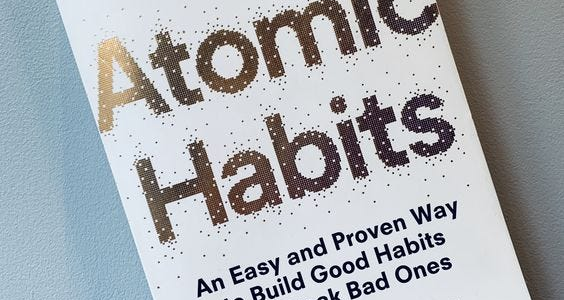
- Title: Atomic Habits
- Author: James Clear
- Genre: Self-Help, Productivity
- Age Rating: 15+
🧠 Summary / Digest
Atomic Habits by James Clear is a definitive guide to understanding and improving our habits using small, consistent changes. The book argues that it’s not massive changes that transform us, but the tiny ones, compounded over time. These “atomic” changes—small and incremental—can lead to significant personal growth when applied consistently. The book draws heavily from psychology, behavioral science, and Clear’s own life experiences, making it both research-based and practical.
The book opens by establishing why habits matter. Clear explains that habits are the compound interest of self-improvement. Just like money multiplies through compound interest, the effects of your habits multiply as you repeat them over time. He warns against undervaluing the importance of 1% improvements that seem trivial in the moment but, over months and years, determine the difference between who you are and who you could be.
Clear introduces the story of his recovery from a devastating baseball injury. This deeply personal narrative sets the stage for the core thesis: major transformations often come from the accumulation of small wins. This story is not just inspirational but also foundational—it grounds the abstract theories that follow in human experience.
At the heart of the book is the Four Laws of Behavior Change: Make it Obvious, Make it Attractive, Make it Easy, and Make it Satisfying. These laws align with a simplified version of the habit loop derived from Charles Duhigg’s “The Power of Habit”: cue, craving, response, and reward.
1. Make it Obvious (Cue): Clear emphasizes the importance of awareness. One cannot change what one does not notice. He introduces the “habit scorecard”—a way to list and evaluate existing habits—and suggests tweaking environmental cues to promote good habits and suppress bad ones.
2. Make it Attractive (Craving): The more appealing a behavior is, the more likely we are to adopt it. Clear draws from dopamine research to show how anticipation drives behavior. Techniques like temptation bundling (pairing an action you want to do with one you need to do) are introduced to make habits more appealing.
3. Make it Easy (Response): Clear explains that human nature leans toward the path of least resistance. To encourage habit formation, reduce friction. He advocates for the “two-minute rule”: any new habit should take less than two minutes to start. The emphasis is on establishing the ritual, not achieving perfection.
4. Make it Satisfying (Reward): Positive reinforcement helps habits stick. Clear explains that if a behavior is satisfying, we’re more likely to repeat it. He recommends tracking progress and celebrating small wins to make the process enjoyable, even if the results are slow to show.
One of the book’s unique ideas is focusing on identity-based habits rather than outcome-based habits. Instead of setting goals like “I want to run a marathon,” Clear suggests shaping your identity: “I am a runner.” The idea is that once you begin to see yourself in a new light, your behaviors will align accordingly. Identity is shaped by repeated evidence: every action you take is a vote for the type of person you wish to become.
Clear also emphasizes the importance of environment design. Instead of relying on willpower alone, he suggests altering your surroundings to encourage better choices. For example, if you want to eat healthier, place fruits on the counter and hide junk food. This approach reduces decision fatigue and creates a system that works in your favor automatically.
The book covers habit stacking (chaining new habits to existing ones), the importance of tracking, how to recover from failure, and building resilient systems. Clear warns against “the plateau of latent potential”—the idea that results lag behind efforts, and many people give up just before a breakthrough. His solution is to stay consistent and trust the process.
What makes the book especially useful is its emphasis on building systems rather than chasing goals. Systems are what carry you forward; goals are just checkpoints. Clear repeatedly asserts that winners and losers often have the same goals—what differentiates them is the system they use daily.
✅ Key Takeaways
- Habits compound over time and shape your identity.
- Focus on small improvements daily.
- Use the Four Laws to shape positive behaviors.
- Build systems, not just goals.
- Design your environment to make success easier.
⭐ Pros
- Practical and easy to follow
- Backed by research but written accessibly
- Includes actionable advice for every reader
⚠️ Cons
- Some repetition across chapters
- Might feel basic for readers familiar with behavioral science
💡 Who Should Read This?
Anyone struggling with building or breaking habits — professionals, students, athletes, creatives — will find this book invaluable. It’s especially useful for those tired of relying solely on willpower.