Book Overview
Title: Can’t Hurt Me
Author: David Goggins
Genre: Memoir, Self-Help, Motivational
Age Rating: Adult


Title: Can’t Hurt Me
Author: David Goggins
Genre: Memoir, Self-Help, Motivational
Age Rating: Adult
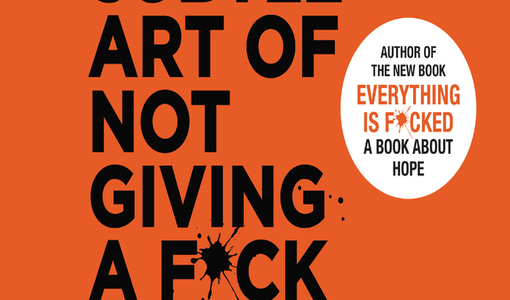
Author: Mark Manson
Genre: Self-Help, Psychology, Philosophy
Age Rating: 18+
The Subtle Art of Not Giving a F*ck by Mark Manson is a counterintuitive guide to living a better life by caring less about more things and caring deeply about what truly matters. Instead of preaching positivity, Manson embraces the truth that life is sometimes hard, unfair, and painful—and that’s okay. Through humor, blunt honesty, and personal stories, he dismantles traditional self-help ideals and builds a new philosophy grounded in responsibility, honesty, and values-driven living.
Manson’s main argument is that we have a limited number of things we can truly care about—our emotional energy and attention are finite. Most people spread themselves too thin, worrying about trivial matters and other people’s opinions. The art of not giving a f*ck is about consciously choosing where to place your care and energy, reserving it only for the things that align with your core values.
Contrary to the popular belief that happiness comes from avoiding problems, Manson states that real satisfaction comes from engaging with and overcoming life’s challenges. The question isn’t whether you’ll have problems—it’s what kinds of problems you’re willing to struggle for. He urges readers to choose their problems wisely, because the quality of your life depends on the quality of your problems.
Borrowing from Charles Bukowski, Manson opens the book with a story about a failed writer whose tombstone reads “Don’t Try.” It’s a paradoxical lesson in effort: the more you chase something because you feel inadequate, the more you reinforce your inadequacy. Manson promotes the idea that embracing your limitations and flaws is the beginning of growth, not endless striving for a perfect, feel-good version of yourself.
Manson introduces the idea of the “Feedback Loop from Hell”—where you feel bad about feeling bad, and that spirals into further distress. He suggests that accepting your emotions and thoughts without judgment breaks this cycle. Negative experiences are part of life, and resisting them only amplifies suffering.
One of the book’s core messages is radical personal responsibility. Even if something isn’t your fault, it’s still your responsibility to handle it. Manson distinguishes between fault (past-oriented) and responsibility (present/future-oriented), emphasizing that growth begins when you take ownership of your response to life’s circumstances.
Not all values are created equal. Manson outlines a hierarchy of values, arguing that some—like honesty, vulnerability, and self-respect—lead to long-term fulfillment, while others—like pleasure, material success, and being “right”—are superficial and unstable. Personal suffering often stems from chasing poor values or defining success based on external approval.
Being certain about everything is not a sign of intelligence or confidence but a sign of fear. Manson encourages readers to remain skeptical of their beliefs and willing to revise them in the face of new evidence. Growth requires the courage to admit you’re wrong and to change your mind when warranted.
This chapter tackles entitlement and the myth of being uniquely gifted or burdened. Manson argues that believing you’re special—either in how great or how awful your problems are—is a trap. True maturity comes from recognizing your ordinariness and focusing on how to be useful rather than exceptional.
Inspired by action-based therapy, Manson promotes a “Do Something” principle: action isn’t just the result of motivation—it’s also the cause. When you feel stuck or unmotivated, do anything, even a small step. Momentum creates clarity and motivation follows action, not the other way around.
The final chapter zooms out and examines how mortality shapes meaning. When we embrace our own death, we clarify our values and priorities. Realizing life is short helps us cut the noise, stop chasing approval, and live more authentically. Death is not to be feared but used as a compass for what truly matters.
The Subtle Art of Not Giving a F*ck isn’t a guide to apathy—it’s a manual for prioritizing your care. By shifting focus from superficial positivity to grounded, values-based living, Mark Manson helps readers live a more honest, resilient, and meaningful life. This digest captures the key ideas, but the raw voice and humor of Manson’s writing are worth experiencing firsthand. Still, even without reading the full book, readers can walk away from this summary with a more practical and empowering worldview.
If you’re interested in diving deeper into The Subtle Art of Not Giving a F*ck, you can buy it on Amazon here
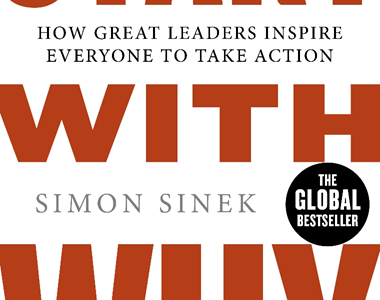
Simon Sinek’s Start with Why explores a fundamental principle of leadership and inspiration: successful individuals and organizations act and communicate starting from a clear “Why” — their purpose, cause, or belief. Drawing from real-life case studies in business, aviation, politics, and entrepreneurship, Sinek uses the “Golden Circle” framework to explain how people can inspire others and build movements that last. It’s a rallying call for purpose-driven leadership and a compelling guide for anyone aiming to lead, innovate, or create lasting impact.
Simon Sinek opens Start with Why with an observation: while many leaders know what they do and how they do it, few can clearly articulate why they do it. According to him, “People don’t buy what you do; they buy why you do it.” This idea becomes the book’s central thesis and is illustrated through his concept of the Golden Circle — a model that consists of three layers: Why (the purpose), How (the process), and What (the product).
Most organizations communicate from the outside in: they start with what they do, then explain how they do it, and rarely discuss why. Inspirational leaders and organizations, however, work from the inside out. They begin by defining their purpose and communicate that belief with clarity. This approach taps into the limbic brain — the part responsible for behavior, decision-making, and feelings — which Sinek argues is more powerful than rational thought when it comes to building loyalty.
Sinek’s Golden Circle model consists of:
He demonstrates this with examples like Apple Inc., the Wright brothers, and Martin Luther King Jr. Apple, for instance, doesn’t just sell computers (What); it challenges the status quo and empowers individuals through innovation (Why). The Wright brothers had little funding or credentials, but they succeeded in manned flight because they were fueled by a purpose beyond fame or money.
According to Sinek, leadership isn’t about power or position — it’s about inspiring people. And inspiration begins with clarity of purpose. Great leaders lead with their Why, and they use it to attract people who believe what they believe. The result is deep loyalty, trust, and alignment.
He contrasts this with manipulative tactics such as discounts, fear, or promotions — which may drive short-term gains but don’t cultivate loyalty. These are “what”-driven strategies, often used in desperation. A clear Why attracts like-minded followers who resonate on an emotional level, creating long-term commitment and advocacy.
Sinek explains that people are drawn to organizations that reflect their own values. When people believe in your Why, they feel that you’re speaking directly to them. This emotional alignment is what builds trust. And with trust, comes loyalty. He uses Southwest Airlines as an example — a company known for its people-first philosophy, strong company culture, and customer loyalty.
This trust doesn’t just apply to consumers but to employees as well. When a company’s Why is clear, it acts as a compass that guides hiring decisions, internal communication, product development, and customer service. It enables a consistent experience and a strong, unified identity.
Sinek emphasizes that the leader’s role is not to come up with all the ideas but to create a space where others can contribute toward a shared vision. A leader must embody the Why, live it authentically, and articulate it clearly. This helps others connect their own beliefs with the organization’s mission.
Leaders who start with Why are not necessarily the loudest or most charismatic, but they are clear, consistent, and committed to their purpose. This clarity influences every decision and keeps the organization aligned and resilient through change or crisis.
Having a Why is only the beginning; it must be reinforced consistently through all actions and communication. Authenticity is critical. When an organization says one thing but does another, it creates confusion and breaks trust. Sinek explains that authenticity comes from discipline — repeatedly acting in alignment with your Why across departments, campaigns, and interactions.
He shares the cautionary tale of TiVo — a product that was revolutionary in function but failed to communicate why it existed. Despite creating an industry-changing technology, TiVo focused its messaging on features (What), not purpose (Why), and struggled to capture the public imagination or loyalty.
Sinek reinforces his ideas with a series of high-impact case studies. Martin Luther King Jr. didn’t give the “I Have a Plan” speech — he gave the “I Have a Dream” speech. He didn’t offer a step-by-step strategy, but a compelling vision rooted in shared values. That vision — the Why — inspired millions and continues to echo through history.
He also highlights companies like Harley-Davidson, which sell more than motorcycles — they sell a lifestyle. People tattoo the Harley logo on their bodies not for the engine specs, but for what the brand represents: freedom, rebellion, and camaraderie.
Start with Why is essential reading for anyone in leadership, entrepreneurship, branding, or marketing. It helps clarify the deeper motivation behind what you do and how you communicate. If you’re seeking to build trust, lead with purpose, or create lasting influence — this book will give you the mindset and framework to get started. Highly recommended for team leaders, startup founders, creatives, and purpose-driven professionals.
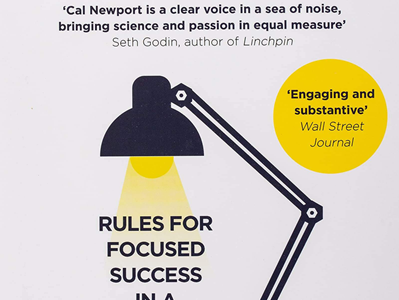
Deep Work: Rules for Focused Success in a Distracted World by Cal Newport presents a compelling case for cultivating deep focus in a world increasingly dominated by distractions. Newport argues that the ability to perform “deep work” — cognitively demanding tasks in a state of distraction-free concentration — is becoming increasingly rare and increasingly valuable in the knowledge economy. This book blends actionable strategies with philosophical insights, making it a must-read for anyone aiming to thrive professionally in the digital age.
Cal Newport opens Deep Work by defining two kinds of work: Deep Work and Shallow Work. Deep Work involves high concentration, skillful thinking, and the creation of new value. Shallow Work, on the other hand, includes tasks that are non-cognitively demanding, often done while distracted — like answering emails or checking social media. Newport argues that while most knowledge workers today are trapped in shallow work cycles, the ability to perform deep work is the key to success in a complex, fast-moving economy.
The book is structured in two parts. Part One lays the philosophical groundwork, making a case for why deep work is valuable, rare, and meaningful. Newport explains that technological shifts — the internet, social media, instant messaging — have fragmented our attention spans. While these tools have some utility, they undermine our ability to work deeply. Newport urges readers to see their attention as a finite resource and to guard it aggressively.
He draws from neuroscience to explain that the brain strengthens the circuits it uses most. If one spends most of the day in shallow, fragmented tasks, the brain becomes less capable of deep thinking. Conversely, if one deliberately practices concentration, the brain becomes better at it. Newport points to historical and modern examples — Carl Jung, Bill Gates, and even successful authors like J.K. Rowling — who retreat into focused environments to accomplish meaningful work.
In Part Two, Newport shares four key “rules” for cultivating a deep work habit:
Newport acknowledges that building deep work into one’s life is difficult. Distractions, social norms, and professional obligations all pull us away from sustained focus. He offers several strategies for embedding deep work into daily life. These include:
To make deep work effective, he emphasizes the need for rituals and routines. For example, one should know where they will work, for how long, and what rules will govern the session. He also suggests leveraging “grand gestures” — radical acts like renting a hotel room for a weekend — to trigger focus and productivity.
In our always-on culture, most people habitually reach for their phones during any idle moment. Newport warns that this constant stimulation erodes our ability to concentrate. He suggests training your brain for boredom by resisting the urge to fill downtime with distractions.
He introduces the concept of productive meditation: using walks or mundane tasks to mull over complex problems. This strengthens one’s “attention control” and makes transitions into deep work easier. The key is to stay focused on one problem without drifting into unrelated thoughts or stimuli.
Newport isn’t anti-technology, but he is critical of the mindless adoption of tools that offer minimal benefit. He introduces the Craftsman’s Approach to Tool Selection: only use a tool if it offers substantial benefits to what you truly value.
Rather than asking, “What’s the worst that could happen if I don’t use Twitter?” Newport flips the question: “Is Twitter significantly helping me achieve my goals?” He encourages readers to try 30-day digital detoxes and reevaluate which tools deserve to be reintroduced.
Since shallow work can’t be completely eliminated, Newport suggests minimizing it. This involves auditing your schedule, eliminating unnecessary meetings, batching emails, and being stingy with your time. One of his more radical suggestions is to schedule every minute of your workday — not to lock yourself into a rigid plan, but to heighten awareness of how you use your time.
Newport also advises creating clear boundaries between work and personal life. A shutdown ritual at the end of the workday helps reinforce the mental barrier and preserves energy for the next day.
The digest concludes with Newport reiterating that the world is becoming increasingly complex, and the few who master the ability to focus without distraction will dominate their fields. In an age of shallow consumption, deep work is a competitive advantage and a path to satisfaction.
Professionals, students, freelancers, writers, and entrepreneurs seeking to maximize productivity and do more meaningful, high-impact work.

Ikigai is a Japanese concept that roughly translates to “a reason for being” or “a reason to get up in the morning.” This book by Héctor García and Francesc Miralles takes readers on a journey to uncover the wisdom behind ikigai and how it contributes to longevity and happiness, especially in the village of Ogimi in Okinawa, which boasts one of the highest concentrations of centenarians in the world.
The authors begin by exploring how different cultures interpret the purpose of life. While Western societies often focus on achievement and productivity, the Japanese philosophy of ikigai centers around balance — doing what you love, what you’re good at, what the world needs, and what you can be paid for. When these four elements intersect, your ikigai reveals itself. The book encourages readers to reflect deeply on these four questions to identify their own life’s calling.
The book is part travelogue, part personal development guide. The authors visit Okinawa to interview the island’s oldest inhabitants. What they discover is a shared lifestyle centered on moderation, movement, community, and joy. There is no concept of retirement in Okinawa — people remain active and engaged in their passions, whether it’s farming, practicing martial arts, or simply participating in local festivals. This consistent activity gives them purpose and fulfillment well into old age.
One of the most impactful chapters is devoted to the idea of “flow” — a state of complete immersion and presence in an activity. The authors reference the work of psychologist Mihaly Csikszentmihalyi, who coined the term. In Okinawa, residents experience flow not in grand pursuits but in everyday tasks — gardening, calligraphy, fishing, or playing an instrument. These activities are performed with care and attention, providing both mental stimulation and emotional peace.
Diet plays a major role in their health as well. The Okinawan diet is rich in vegetables, tofu, sweet potatoes, seaweed, and green tea. They follow the “hara hachi bu” principle, which means eating only until you’re 80% full. This practice reduces caloric intake and prevents the physical discomfort of overeating. More importantly, it reflects mindfulness — a consistent theme throughout the book.
Social structure is another pillar of longevity. Okinawans belong to tightly-knit social groups called “moai” — informal communities of support that meet regularly, share meals, help each other in times of need, and provide a sense of belonging. In contrast to the often isolated elderly populations in Western societies, Okinawan elders are integrated into their community. They remain respected and socially engaged, which reduces stress and increases happiness.
The book emphasizes the harmful effects of chronic stress and the importance of managing it for long-term health. Practices like tai chi, meditation, and time in nature are recommended. But more than any single habit, the authors argue that having a clearly defined purpose — one’s ikigai — acts as a natural stress buffer. When you know why you’re waking up every day, life’s challenges become easier to face.
One interesting insight is that people with a strong sense of purpose live longer even if they don’t follow perfect health routines. The authors present examples of individuals in their 90s and 100s who have never set foot in a gym but walk, garden, cook, or dance daily. Their lives are not defined by rigid routines or optimization, but by rhythm, connection, and enjoyment.
In addition to qualitative stories, the book distills its wisdom into practical takeaways. It offers ten rules for a long and happy life, including:
The beauty of Ikigai lies in its simplicity. It’s not prescriptive in the way many self-help books are. Instead, it invites readers to slow down, reflect, and make incremental lifestyle adjustments. There are no grand declarations or complex frameworks — just stories, insights, and questions that help the reader align with a more authentic way of living.
Critically, the authors do not present ikigai as a one-size-fits-all formula. It is unique to each person and can evolve with time. A young professional’s ikigai might lie in building something innovative, while an elder’s ikigai may rest in mentoring or preserving cultural traditions. The goal is not to chase happiness but to live meaningfully, which often leads to happiness as a byproduct.
Overall, the book is a gentle, affirming guide. It blends wisdom from Eastern philosophy with practical lifestyle advice for readers seeking to cultivate meaning in an increasingly fast-paced and disconnected world. It doesn’t promise quick fixes but encourages a more mindful and sustainable way of living — one that honors purpose, simplicity, and community.
Perfect for readers seeking a calming, reflective guide to finding purpose and improving well-being through small, daily changes. Recommended for fans of Eastern wisdom, wellness enthusiasts, and those re-evaluating work-life balance.
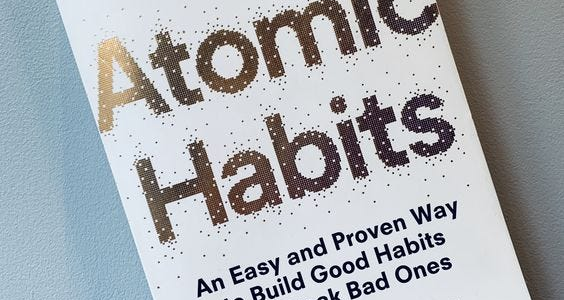
Atomic Habits by James Clear is a definitive guide to understanding and improving our habits using small, consistent changes. The book argues that it’s not massive changes that transform us, but the tiny ones, compounded over time. These “atomic” changes—small and incremental—can lead to significant personal growth when applied consistently. The book draws heavily from psychology, behavioral science, and Clear’s own life experiences, making it both research-based and practical.
The book opens by establishing why habits matter. Clear explains that habits are the compound interest of self-improvement. Just like money multiplies through compound interest, the effects of your habits multiply as you repeat them over time. He warns against undervaluing the importance of 1% improvements that seem trivial in the moment but, over months and years, determine the difference between who you are and who you could be.
Clear introduces the story of his recovery from a devastating baseball injury. This deeply personal narrative sets the stage for the core thesis: major transformations often come from the accumulation of small wins. This story is not just inspirational but also foundational—it grounds the abstract theories that follow in human experience.
At the heart of the book is the Four Laws of Behavior Change: Make it Obvious, Make it Attractive, Make it Easy, and Make it Satisfying. These laws align with a simplified version of the habit loop derived from Charles Duhigg’s “The Power of Habit”: cue, craving, response, and reward.
1. Make it Obvious (Cue): Clear emphasizes the importance of awareness. One cannot change what one does not notice. He introduces the “habit scorecard”—a way to list and evaluate existing habits—and suggests tweaking environmental cues to promote good habits and suppress bad ones.
2. Make it Attractive (Craving): The more appealing a behavior is, the more likely we are to adopt it. Clear draws from dopamine research to show how anticipation drives behavior. Techniques like temptation bundling (pairing an action you want to do with one you need to do) are introduced to make habits more appealing.
3. Make it Easy (Response): Clear explains that human nature leans toward the path of least resistance. To encourage habit formation, reduce friction. He advocates for the “two-minute rule”: any new habit should take less than two minutes to start. The emphasis is on establishing the ritual, not achieving perfection.
4. Make it Satisfying (Reward): Positive reinforcement helps habits stick. Clear explains that if a behavior is satisfying, we’re more likely to repeat it. He recommends tracking progress and celebrating small wins to make the process enjoyable, even if the results are slow to show.
One of the book’s unique ideas is focusing on identity-based habits rather than outcome-based habits. Instead of setting goals like “I want to run a marathon,” Clear suggests shaping your identity: “I am a runner.” The idea is that once you begin to see yourself in a new light, your behaviors will align accordingly. Identity is shaped by repeated evidence: every action you take is a vote for the type of person you wish to become.
Clear also emphasizes the importance of environment design. Instead of relying on willpower alone, he suggests altering your surroundings to encourage better choices. For example, if you want to eat healthier, place fruits on the counter and hide junk food. This approach reduces decision fatigue and creates a system that works in your favor automatically.
The book covers habit stacking (chaining new habits to existing ones), the importance of tracking, how to recover from failure, and building resilient systems. Clear warns against “the plateau of latent potential”—the idea that results lag behind efforts, and many people give up just before a breakthrough. His solution is to stay consistent and trust the process.
What makes the book especially useful is its emphasis on building systems rather than chasing goals. Systems are what carry you forward; goals are just checkpoints. Clear repeatedly asserts that winners and losers often have the same goals—what differentiates them is the system they use daily.
Anyone struggling with building or breaking habits — professionals, students, athletes, creatives — will find this book invaluable. It’s especially useful for those tired of relying solely on willpower.