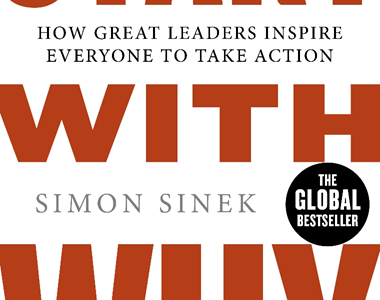
Book Title: Start with Why
Author: Simon Sinek
Genre: Business / Leadership / Motivation
Age Rating: 14+
Overview:
Simon Sinek’s Start with Why explores a fundamental principle of leadership and inspiration: successful individuals and organizations act and communicate starting from a clear “Why” — their purpose, cause, or belief. Drawing from real-life case studies in business, aviation, politics, and entrepreneurship, Sinek uses the “Golden Circle” framework to explain how people can inspire others and build movements that last. It’s a rallying call for purpose-driven leadership and a compelling guide for anyone aiming to lead, innovate, or create lasting impact.
Summary / Digest:
Simon Sinek opens Start with Why with an observation: while many leaders know what they do and how they do it, few can clearly articulate why they do it. According to him, “People don’t buy what you do; they buy why you do it.” This idea becomes the book’s central thesis and is illustrated through his concept of the Golden Circle — a model that consists of three layers: Why (the purpose), How (the process), and What (the product).
Most organizations communicate from the outside in: they start with what they do, then explain how they do it, and rarely discuss why. Inspirational leaders and organizations, however, work from the inside out. They begin by defining their purpose and communicate that belief with clarity. This approach taps into the limbic brain — the part responsible for behavior, decision-making, and feelings — which Sinek argues is more powerful than rational thought when it comes to building loyalty.
The Golden Circle Explained
Sinek’s Golden Circle model consists of:
- Why: The purpose, cause, or belief that inspires you to do what you do.
- How: The process or values that guide how you fulfill your Why.
- What: The tangible products, services, or results of your actions.
He demonstrates this with examples like Apple Inc., the Wright brothers, and Martin Luther King Jr. Apple, for instance, doesn’t just sell computers (What); it challenges the status quo and empowers individuals through innovation (Why). The Wright brothers had little funding or credentials, but they succeeded in manned flight because they were fueled by a purpose beyond fame or money.
Leaders Need a Clear Why
According to Sinek, leadership isn’t about power or position — it’s about inspiring people. And inspiration begins with clarity of purpose. Great leaders lead with their Why, and they use it to attract people who believe what they believe. The result is deep loyalty, trust, and alignment.
He contrasts this with manipulative tactics such as discounts, fear, or promotions — which may drive short-term gains but don’t cultivate loyalty. These are “what”-driven strategies, often used in desperation. A clear Why attracts like-minded followers who resonate on an emotional level, creating long-term commitment and advocacy.
Trust and Loyalty
Sinek explains that people are drawn to organizations that reflect their own values. When people believe in your Why, they feel that you’re speaking directly to them. This emotional alignment is what builds trust. And with trust, comes loyalty. He uses Southwest Airlines as an example — a company known for its people-first philosophy, strong company culture, and customer loyalty.
This trust doesn’t just apply to consumers but to employees as well. When a company’s Why is clear, it acts as a compass that guides hiring decisions, internal communication, product development, and customer service. It enables a consistent experience and a strong, unified identity.
The Role of the Leader
Sinek emphasizes that the leader’s role is not to come up with all the ideas but to create a space where others can contribute toward a shared vision. A leader must embody the Why, live it authentically, and articulate it clearly. This helps others connect their own beliefs with the organization’s mission.
Leaders who start with Why are not necessarily the loudest or most charismatic, but they are clear, consistent, and committed to their purpose. This clarity influences every decision and keeps the organization aligned and resilient through change or crisis.
Consistency Is Key
Having a Why is only the beginning; it must be reinforced consistently through all actions and communication. Authenticity is critical. When an organization says one thing but does another, it creates confusion and breaks trust. Sinek explains that authenticity comes from discipline — repeatedly acting in alignment with your Why across departments, campaigns, and interactions.
He shares the cautionary tale of TiVo — a product that was revolutionary in function but failed to communicate why it existed. Despite creating an industry-changing technology, TiVo focused its messaging on features (What), not purpose (Why), and struggled to capture the public imagination or loyalty.
Case Studies and Real-World Examples
Sinek reinforces his ideas with a series of high-impact case studies. Martin Luther King Jr. didn’t give the “I Have a Plan” speech — he gave the “I Have a Dream” speech. He didn’t offer a step-by-step strategy, but a compelling vision rooted in shared values. That vision — the Why — inspired millions and continues to echo through history.
He also highlights companies like Harley-Davidson, which sell more than motorcycles — they sell a lifestyle. People tattoo the Harley logo on their bodies not for the engine specs, but for what the brand represents: freedom, rebellion, and camaraderie.
Key Takeaways:
- Start with Why: Every great leader or brand begins by defining their purpose — their reason for existence.
- People buy Why, not What: Customers and employees are inspired by belief and values more than features or salaries.
- Inspire, don’t manipulate: Incentives and gimmicks may work short term, but purpose builds long-term loyalty.
- Clarity, consistency, and authenticity are critical: Your Why must align with your actions to build trust.
- Leadership is about inspiration, not control: Create a vision that others can believe in and contribute to.
Pros:
- Simple yet powerful framework (Golden Circle) for communication and leadership.
- Filled with real-world examples that make concepts memorable and relatable.
- Encourages deeper introspection for leaders, entrepreneurs, and marketers.
Cons:
- Concepts are somewhat repetitive across chapters.
- Less tactical guidance — it’s more about mindset than actionable tools.
Recommendation:
Start with Why is essential reading for anyone in leadership, entrepreneurship, branding, or marketing. It helps clarify the deeper motivation behind what you do and how you communicate. If you’re seeking to build trust, lead with purpose, or create lasting influence — this book will give you the mindset and framework to get started. Highly recommended for team leaders, startup founders, creatives, and purpose-driven professionals.